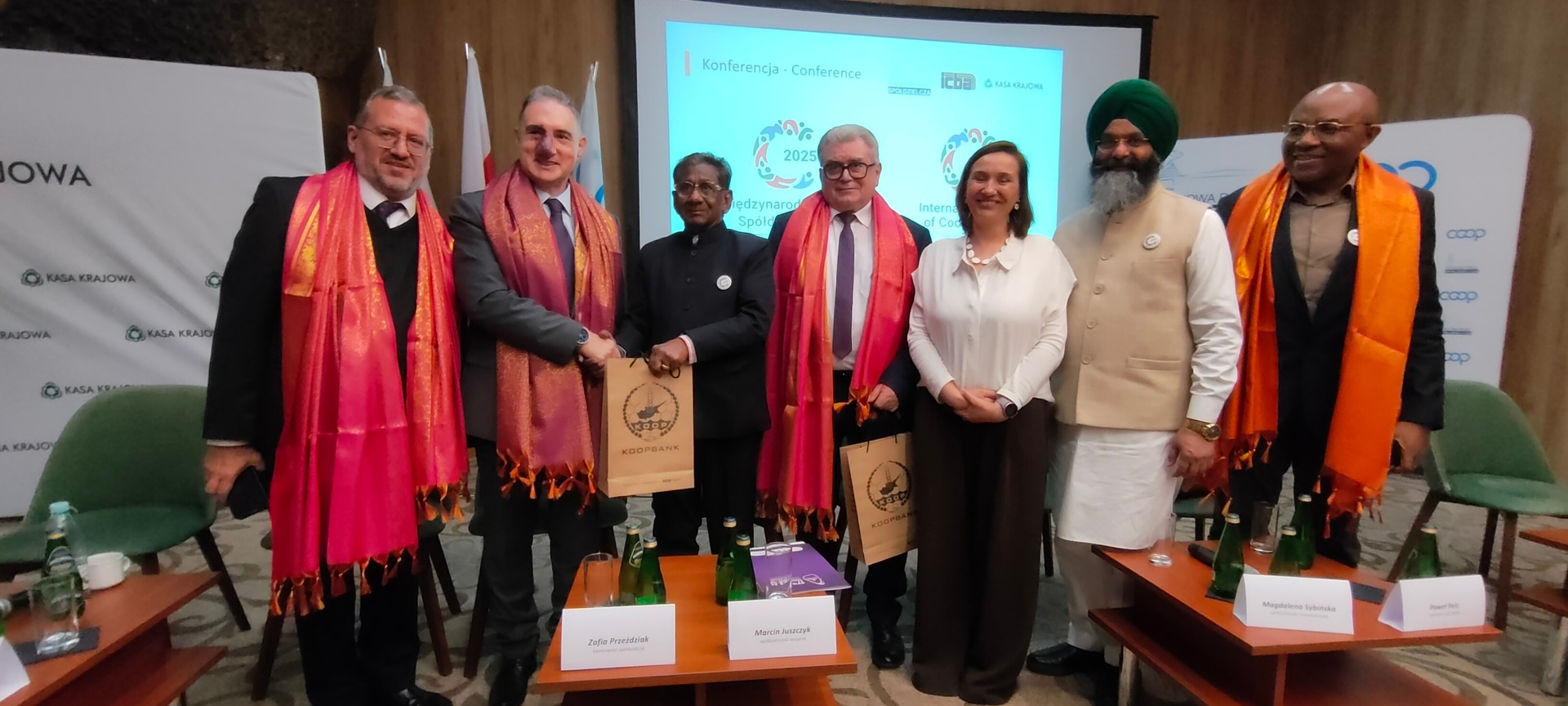
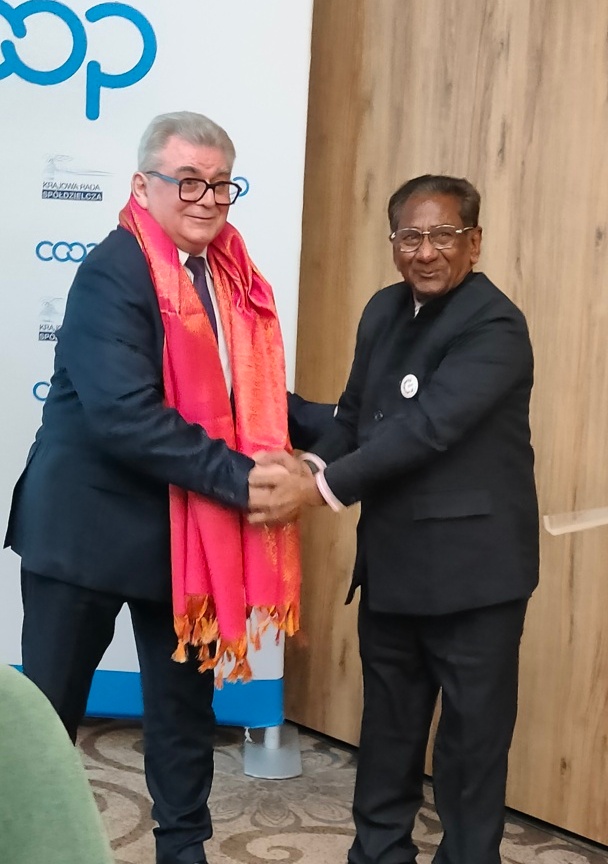
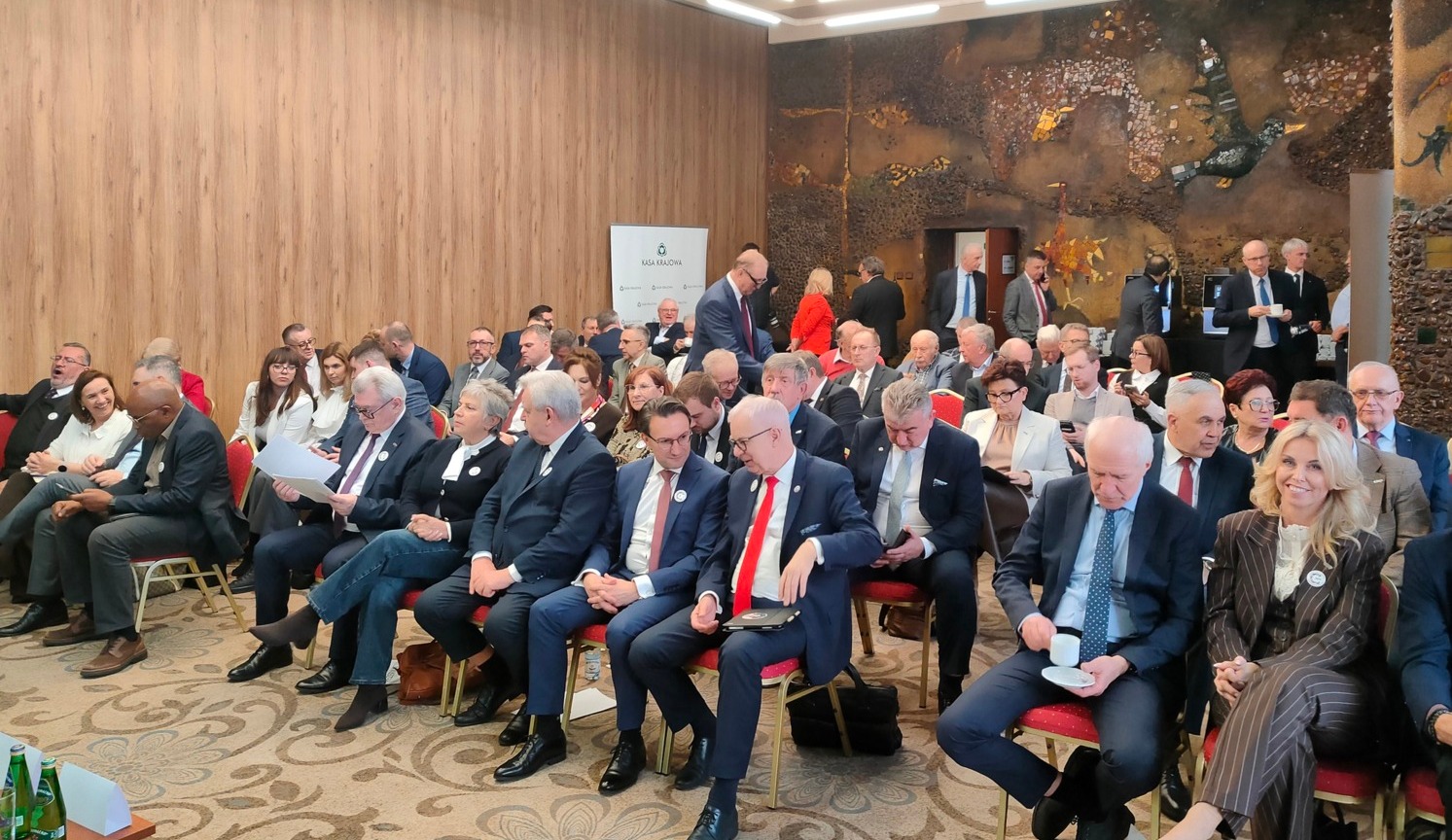
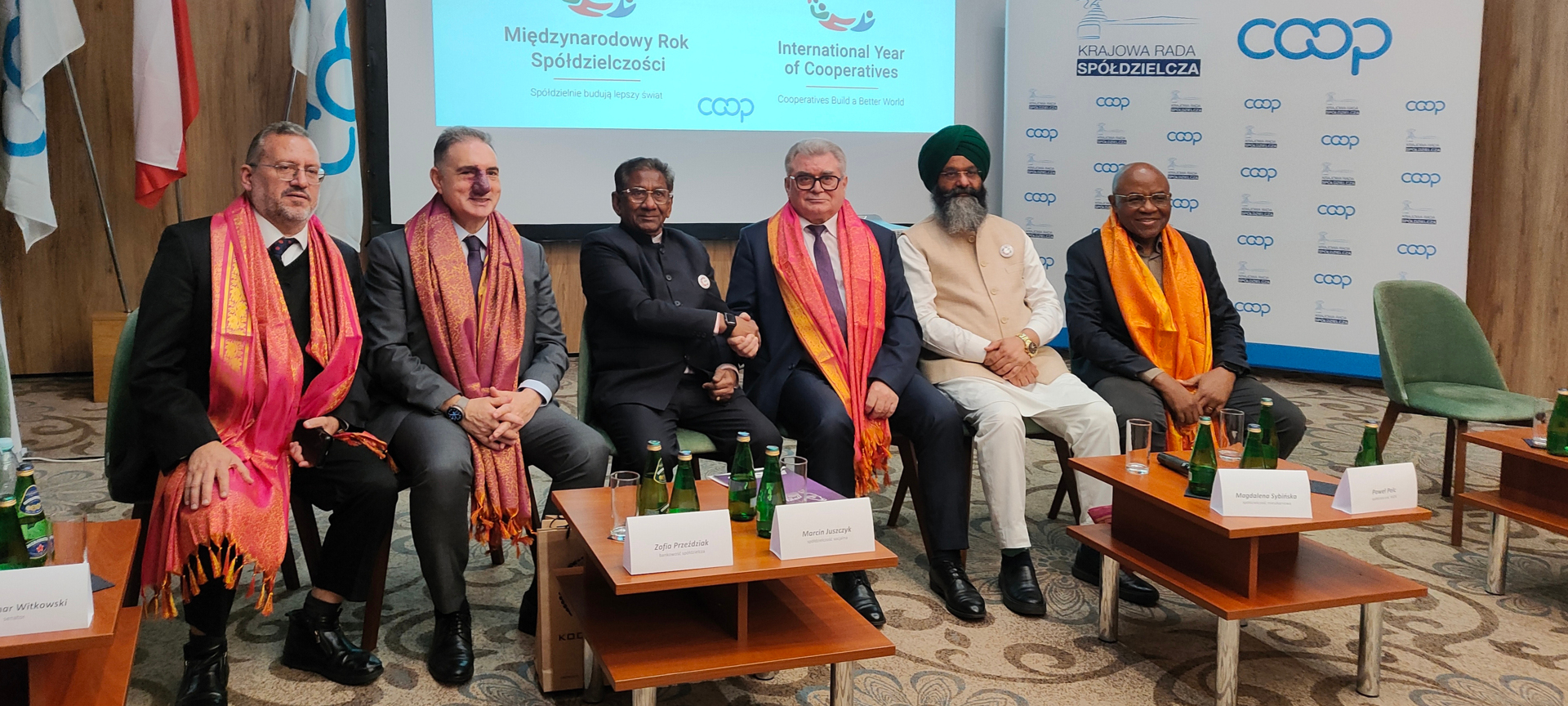
On December 11th this year, a meeting summarizing the International Year of Cooperatives took place at the Gromada Centrum Hotel in Warsaw, attended by parliamentarians, representatives of public ministries, and numerous cooperators from Poland and abroad. Members of the Board of the International Cooperative Banking Association (ICBA) participated in the meeting.
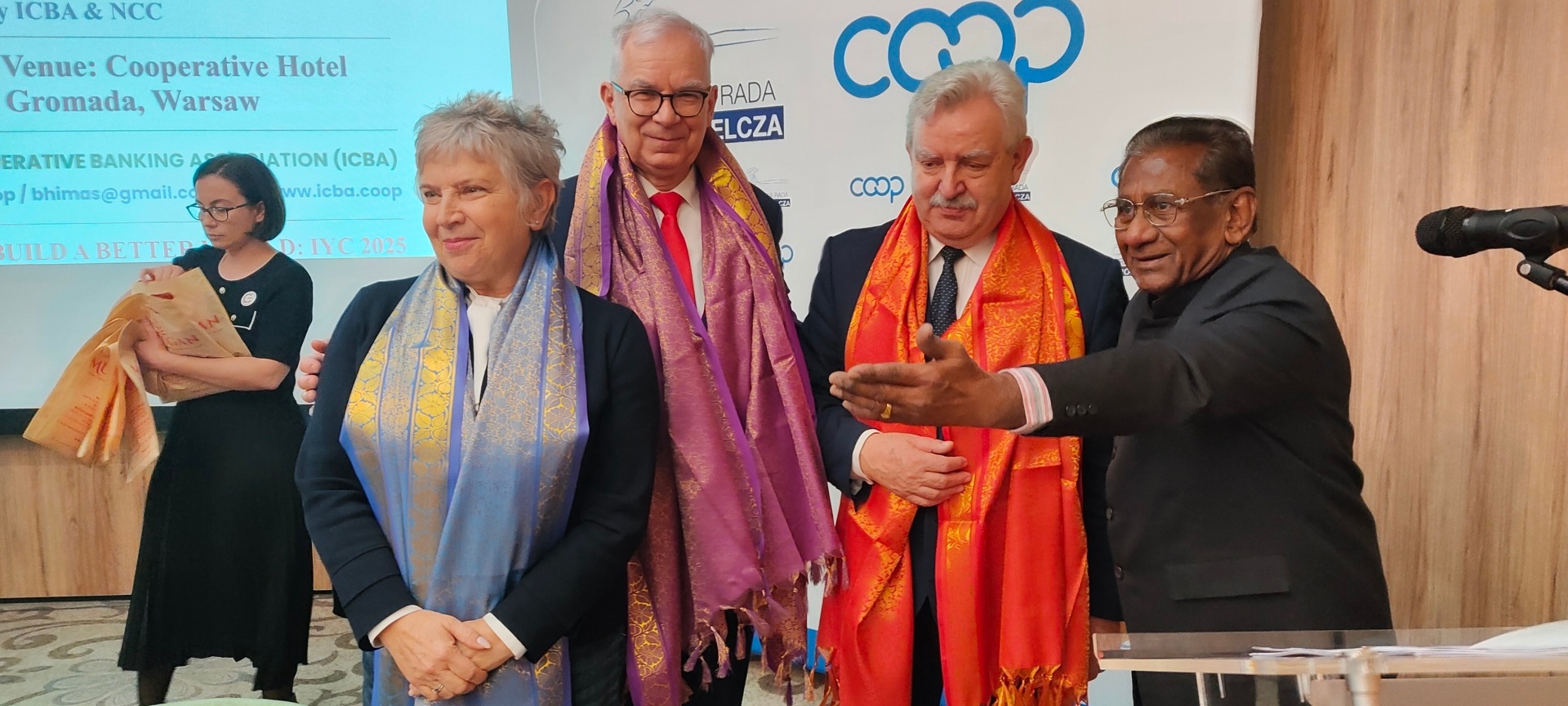
The invitation from the National Cooperative Council was accepted by members of the Parliamentary Team for Cooperatives, Senators Joanna Sekuła, Kazimierz Kleina, and Waldemar Witkowski, as well as the Undersecretary of State in the Ministry of Development and Technology Tomasz Lewandowski. Many cooperators gathered, including ICBA Board members led by the President of the organization Bhima Subrahmanyam - one of the leaders of the Indian cooperative and state bank system. Representatives of Polish banking organizations were also present: the Chairman of the Board of the Polish Bank Association Krzysztof Karwowski and Board advisor Łukasz Bogusz. The Cooperative Banking Group was represented by Vice President of the Board Ewelina Pałubicka, and also present was the President of the Board of the Cooperative Protection System of the BPS Association Sławomir Czopur. KZBS was represented by Vice President of the Board Jacek Rapeć, and the SKOK sector by Rafał Matusiak, President of the National Cooperative Savings and Credit Union. SKOK was one of the patrons of the meeting along with UNIQA Insurance Company S.A., whose Board representative Adam Łoziak also took part in the ceremony. Among the representatives of the banking sector was also the President of the Board of the oldest cooperative bank in Poland - BS Brodnica, Aleksander Mikołajczyk.
Welcoming everyone at the ceremony, the President of the National Cooperative Council Board, Mieczysław Grodzki, recalled the most important events of the concluding International Year of Cooperatives and the actions of the National Cooperative Council. As he emphasized – the UN recognized this model of management as the best possible: democratic, inclusive, non-exploitative, mindful of the environment and the welfare of local communities. We have done a lot this year to convince both the government and society about it. He sincerely thanked all those who contributed to achieving this goal, emphasizing that what was accomplished in the International Year of Cooperatives will serve the development and future of the entire movement.
The theme of continuing the initiatives started this year was present in many speeches at the concluding ceremony.
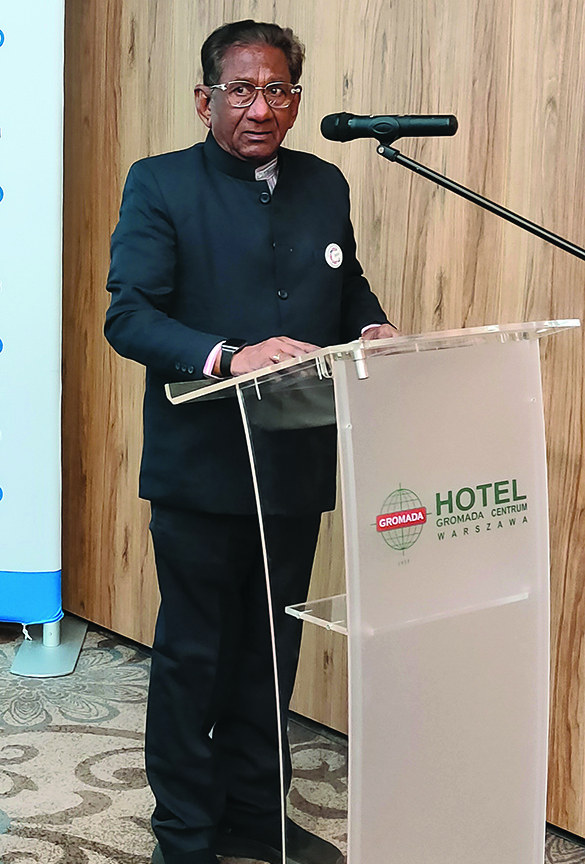
Bhima Subrahmanyam reminded that the plan for the International Year of Cooperatives was approved at the end of 2024 in New Delhi and was merely a starting point for initiatives currently being implemented. The tasks that global cooperative organizations see ahead are significant – primarily poverty elimination, strengthening social integration, improving women's professional status, digitalization, as well as issues related to climate protection (renewable energy and sustainable agriculture). In the new year, a roadmap for future actions is to be created, with a key focus on improving legislation to make it easier for cooperatives to implement these tasks. - Let's not end this year with a feeling of closing something, but with an awareness of a mission for the coming years - he appealed.
Next, Minister Tomasz Lewandowski, responsible for the governmental reform of the functioning of housing cooperatives, spoke, referring to this topic in his speech. - For the first time in years, as a government team, we are not considering how to dismantle housing cooperatives and replace them with communities, but we want to build solid foundations for their development - he emphasized. – We are thinking about how to equip cooperatives with land, strengthen tenant construction, and provide its financing. We will not surprise anyone with changes - we want to consult them and expect an honest discussion about what to change and what should remain untouched - he stressed.
Rafał Matusiak, President of the National SKOK, referred to the essence of the functioning of cooperatives, which has the ability to combine economic activity with a social mission. SKOKs are a particularly important element in this system, as they address fundamental problems of financial security for people by offering them simple financial services. Members of the savings and credit unions learn responsibility by operating on the principle of mutual assistance. Money does not have to be a tool of social exclusion. On the contrary, it can serve social solidarity, and that is how cooperatives treat it, never leaving people on their own.
Senator Joanna Sekuła convinced that for over 200 years cooperatives have remained an attractive economic model. - It is a huge movement that encompasses the entire world from India to Poland - she emphasized. - It is attractive to the younger generation as it builds a collective whose members share responsibility and profits and allows them to shape the world according to their own principles. It was a great surprise for me that youth today do not seek stabilized structures, set their own goals and use their own methods, and cooperatives allow them to shape this world according to their own principles - she added.
Senator Waldemar Witkowski reminded that good law is necessary for this. - We have a good climate for cooperatives in the Polish Senate today - he stated. – We have prepared a draft education law to strengthen student cooperatives. In fact, all cooperative sectors today need good law, and I hope it will be made in consultation with our environment.
Chairman of the Regional Board of the National Cooperative Council Andrzej Półrolniczak referred to the work on the draft law on housing cooperatives, which contains many good solutions but also provisions unacceptable to cooperators. Therefore, he stressed, consultations and constructive discussions are necessary.
Anna Bulka, President of the Cooperative Development Foundation, recalling this year's jubilee of the 125th anniversary of the founding of the first student cooperative, drew attention to its role in education and building civic attitudes.
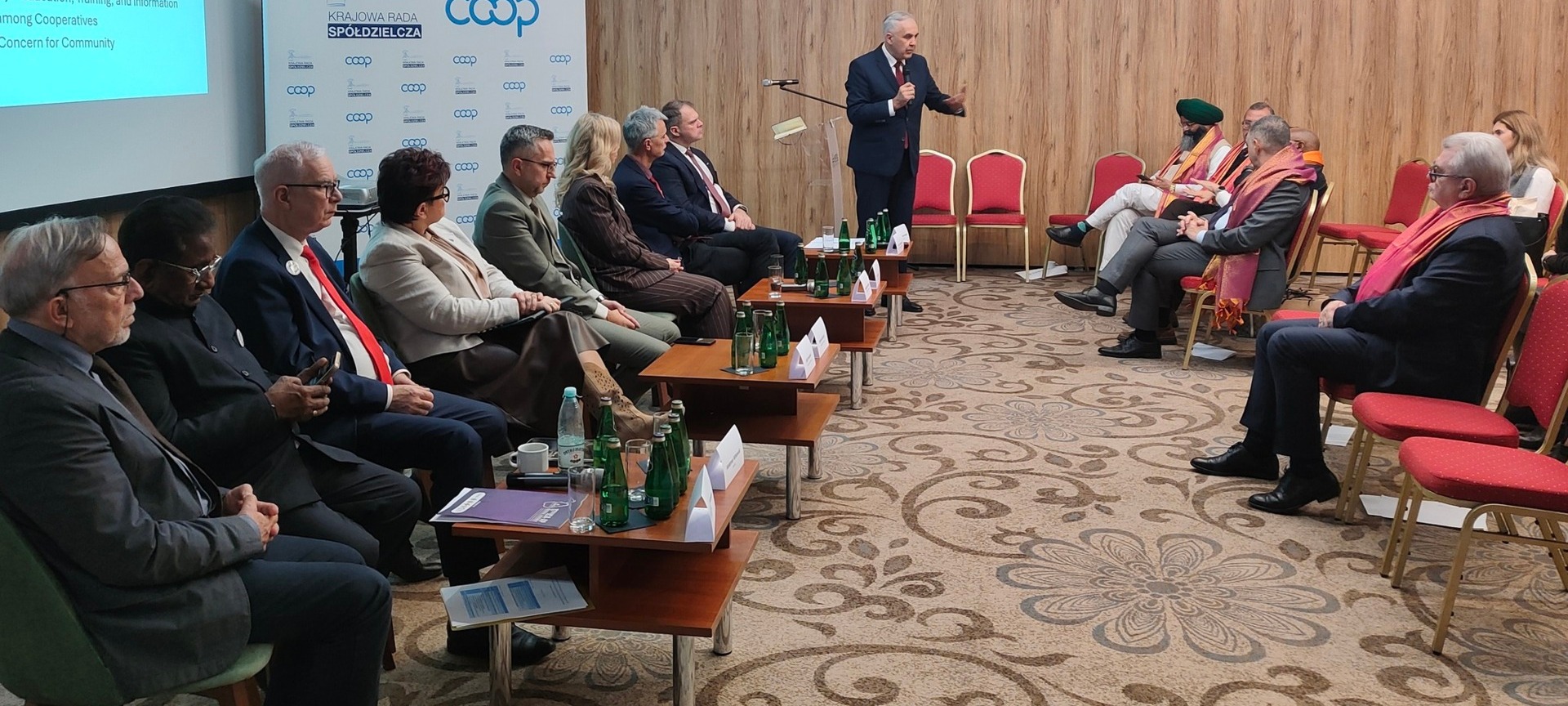
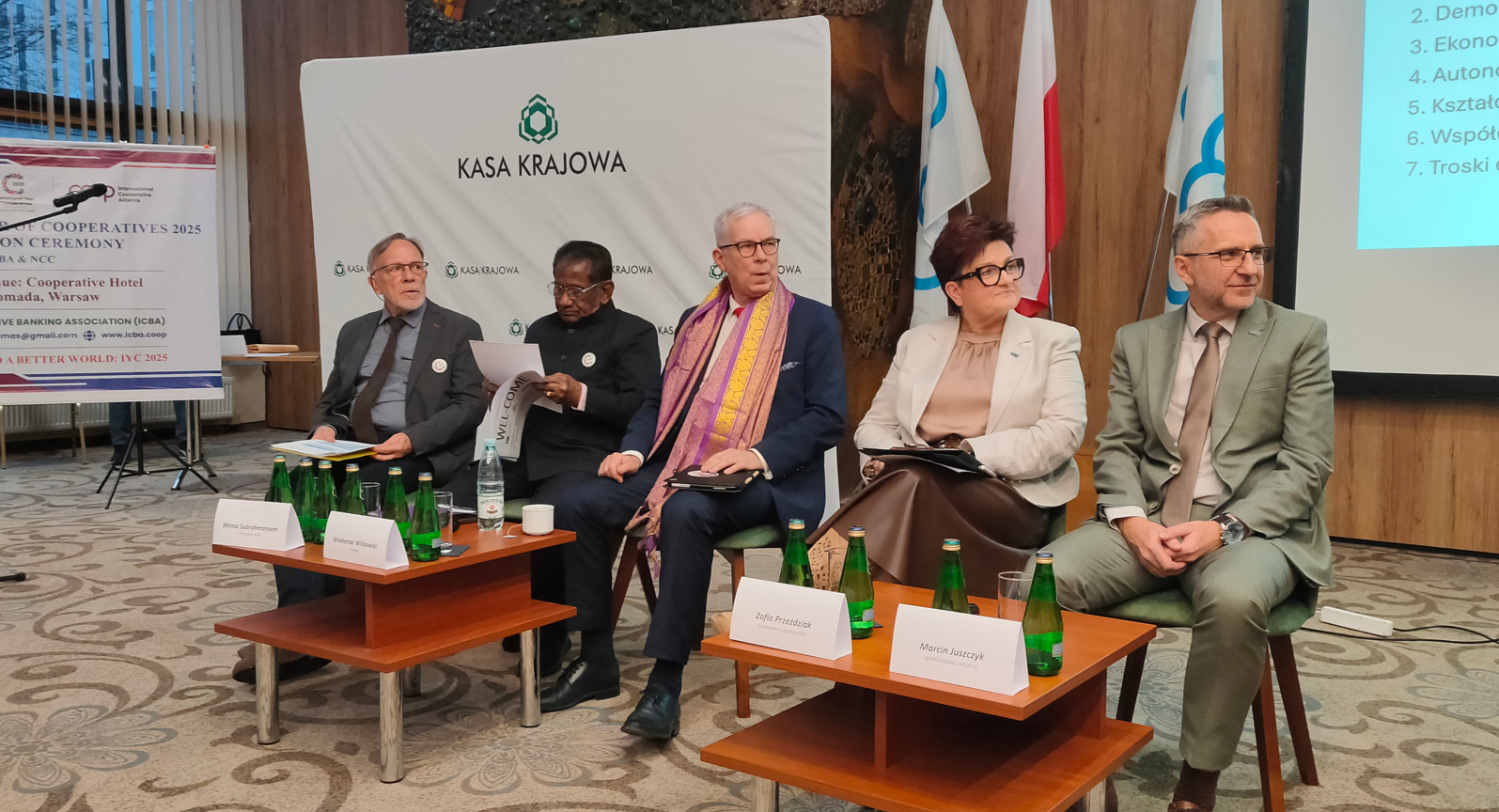
The meeting concluded with a debate dedicated to the relevance of the 7 International Cooperative Principles. Participants included ICBA President Bhima Subrahmanyam, Senator Waldemar Witkowski, and representatives of various sectors: Julian Brewka (municipal cooperatives), Marcin Juszczyk (social cooperatives), Paweł Pelc (SKOK), Zofia Przeździak (cooperative banks), Magdalena Sybińska (housing cooperatives). The debate was led by Dr. hab. Antonii Magdoń, professor at the University of Rzeszów, referring to the work of the 2015 Nobel Prize winner in economics, professor Angus Deaton – a researcher with a critical approach to civilizational progress and capitalism. Putting forward the thesis that poorly managed progress creates new forms of inequality and undermines the foundations of social stability, he asked cooperators-practitioners to reflect. Discussions were held on what cooperative enterprises do to stop negative trends that directly translate into human life tragedies. Cooperatives offer affordable financial services, conduct social and cultural activities, build housing, and provide employment to millions. It was noted that cooperatives often replace the State in various tasks – e.g., in social employment, as supporting people at risk of social exclusion costs the budget much more than supporting social cooperatives. Cooperatives differ from large companies in that they do not accumulate capital, making it difficult to compete with capital. As emphasized unanimously – cooperative principles are the unchanging foundation of their activities, and where they begin to be disregarded, problems arise. Therefore, it is worth seeking solutions to adapt these principles as best as possible to changing external conditions without violating their essence, which always places humans at the center.